The rise of YeeChain headquarters is not just a construction; it is a statement—an architecture as action, a physical manifesto for a company that implements its own sustainable future; it follows the logics of the contemporary environmental coordination: net-zero, circular economy, industrial ecology—a choreography between production, responsibility, and the urban climate.
The company manufactures textiles, yet the architecture performs a territorial synchronization—with global standards, with environmental protocols, with the moral orchestrated rhythm of avant self-sufficient sustainability.
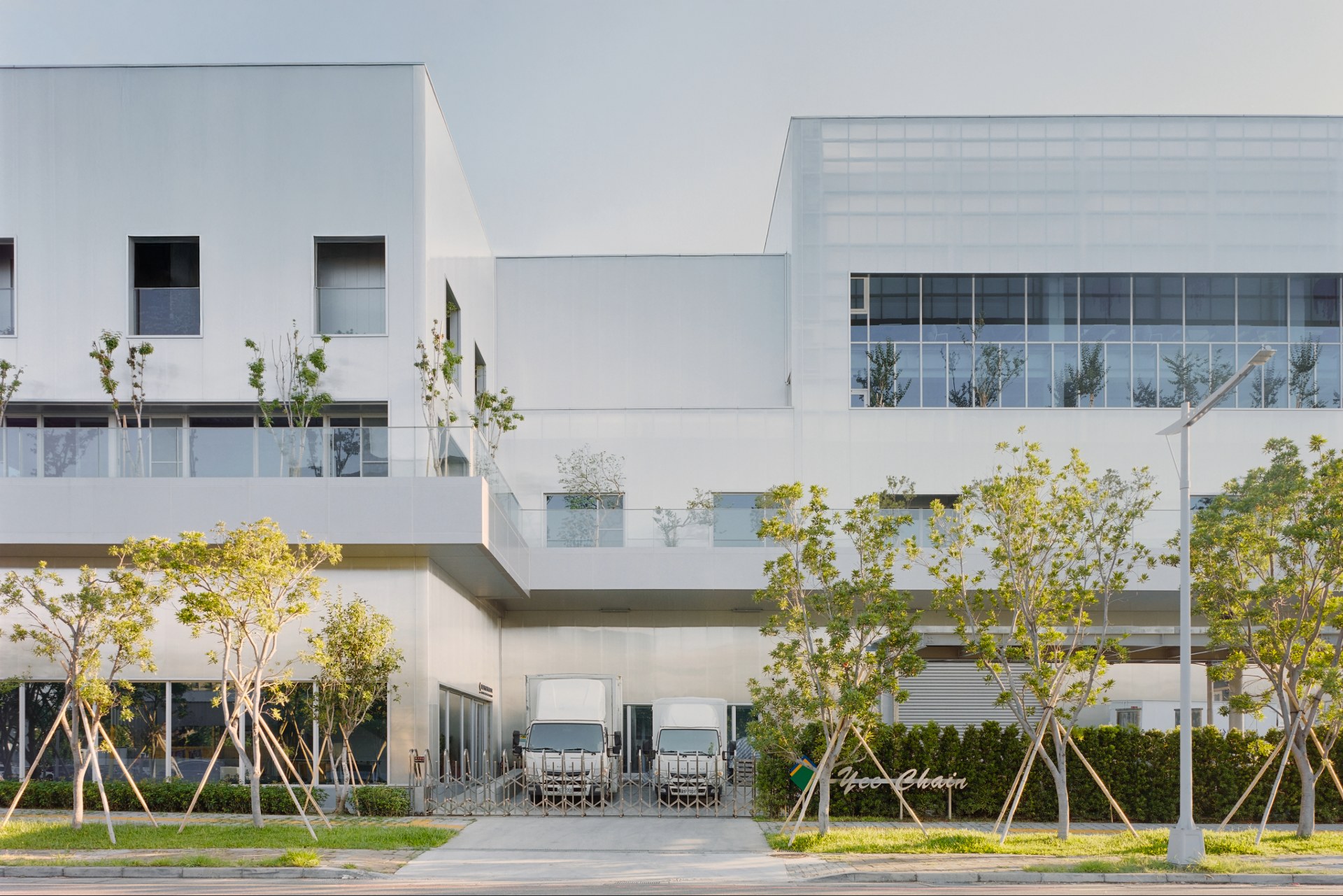
The building constitutes taxonomy of programs—office, sustainable R&D, warehouse, logistics, NGO co-working, cafeteria, exhibition hall, educational forum, sports and social leisure spaces—interlaced with ecological devices: a tempered corridor, a series of humid soil courtyards (cool islands), arboreal terraces that direct wind, and a power-generating roof; all rope in a thin air-majored envelope, an interior frontier.
Vertical functional efficiency dictates the composition: warehouse below, then layers of office of management, and communal zones rising above; the front wing houses the exhibition level, NGO offices, and public classrooms; the circulations and the courtyards present as void columns between levels, optimized the operational ecology, and a vertical and horizontal association between production and exchange, the compartment of hierarchy in functions and performance.
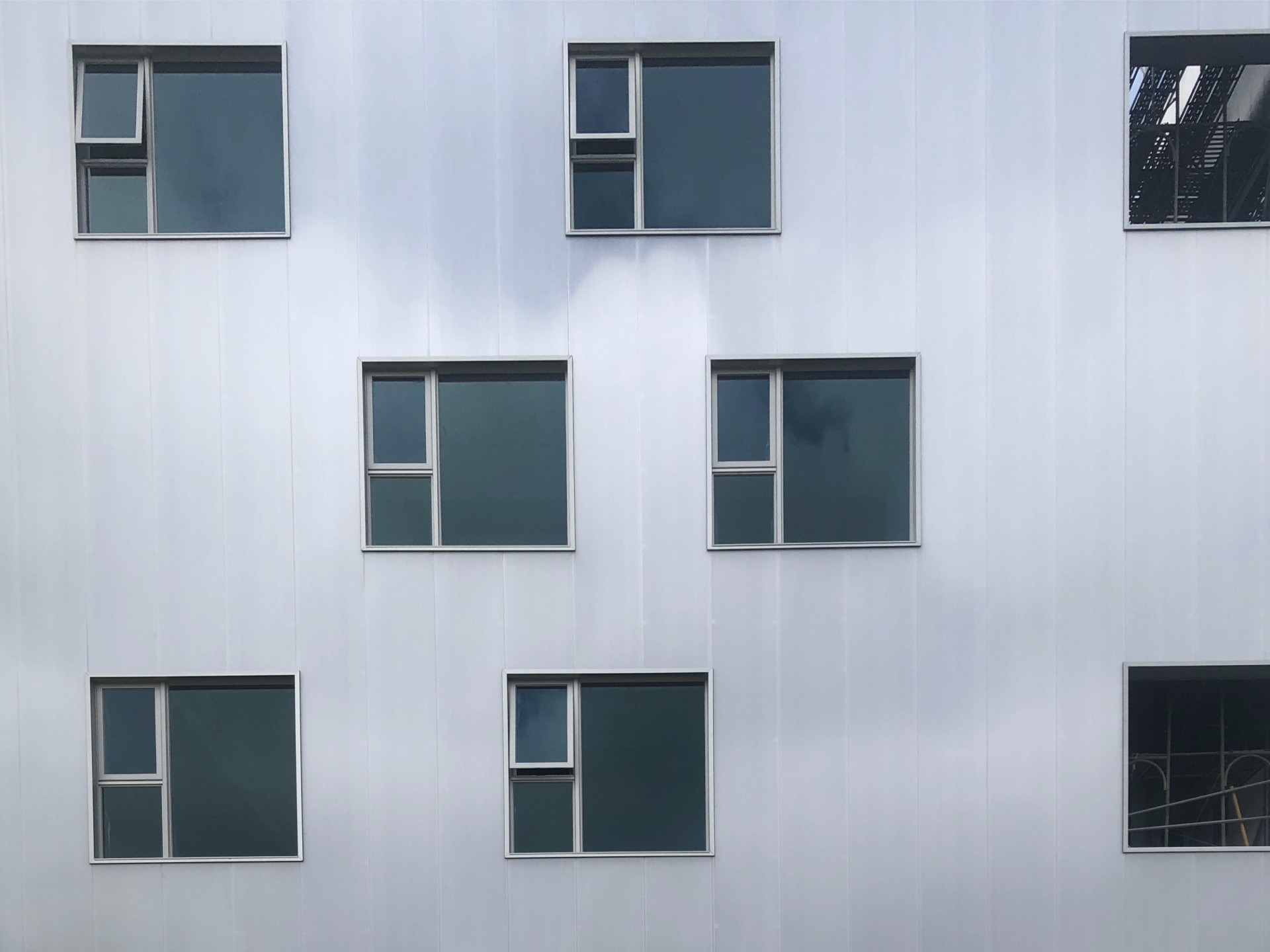
The envelope rejects inertia. Low-conductivity, low-thermal-mass, high-dissipation cladding systems define its skin, the very thin layers constituted with a series of air chambers, the metal membrane, the recyclable polycarbonate panels float as an outer interface, reflecting sunlight, reducing the absorption of heat; trees shade, perspire, and conspire with biology—their evapotranspiration generates pressure gradients, their presence induces airflow while allowing heat to drift. Nature becomes the building’s ventilation amplifier.
Inside, the courtyard is climate: damp soil, moist air, dense vegetation, a series of subtropical cool islands that preconditions air before it meets machinery, to blow in between spaces.
This micro-ecology reduces mechanical load, transforming photosynthesis into infrastructure.The green spectrum and biophilic geometry nurture human metabolism—health, serotonin, pulse. Even pets considered visitors become part of the building’s rhythm. Light enters obliquely; the plan folds around it—service zones west as a barrier of sunset, laboratories south zoom the industrial vision, circulation looping in soft thermal gradients, and the exhibition corridors escort sustainable acts.
A year after completion, it achieves LEED v4 Platinum certification; CORE/LBC review follows; where daylight replaces electricity; shadow replaces energy; net-zero becomes not an ambition, but a discipline; architecture, it situates, as ecology, as system, as performance.
The building produces energy, recycles water, and consumes self-sufficiently. Electricity use drops by 75% even as volume increases 2.7 times. Photovoltaics generate 170,000 kWh/yr—the building becomes a small power plant. Greywater circulates; materials reincarnate—old furniture reborn,rehab, and low-VOC materials speak quietly of carbon restraint. Yet the completion is only the beginning: daily carbon reduction, green planting, environmental activism—all operate as ecology of the architecture itself.
This is not merely a factory; it plans as a metabolism, a loop. as roles alleviates the heat pressure; a prototype of urban instrument—a cooling machine disguised as architecture.
鎰呈行總部的矗啟,並非僅是建造一座建築;它是一種宣示/一種以建築作為行動的姿態,是企業自我實現永續未來的物質宣言。它依循當代環境協作的指標邏輯:淨零、循環、產業生態-在生產、責任與城市氣候之間來回進行一場共舞。
企業專業於織品生產銷售,於總部的搬遷計畫中,擬出一場自我的革命──建築欲執行一種環境與生產領域,在尺度上與概念上的同步化──與全球標準、環境規範、以及前衛自給永續的道德節奏同步,一種看似政治正確般,卻有不可或缺的、信念化的同步。
建築由地上四層、地下一層、大小兩棟,由功能分類疊起:辦公、永續研發、倉儲、物流、NGO 共享空間、餐廳、展覽廳、教育會議室、運動與社交休憩空間──並與空間化、生態化的環控機器交織:內氣調節型的回溫走廊、多組外氣預冷的濕土植栽氣候內院(冷島)、導風的喬木露台、以及片完滿發電的屋頂;全部被繫在一層纖薄、以空氣為主體的建築外殼之中,一道內部邊界。
垂直化的機能效率決定了配置構成:底層為入口展覽大廳、倉儲物流,上方是管理與辦公層,再更上面是公共與共享空間;前翼容納展覽層、NGO 辦公室與開放教室;動線與氣候內院以「空隙柱」的概念垂直切入,在樓層之間連續穿透,使辦公與廠房間,在功能與性能之間的層級分區運作生態得以最佳化,並在生產、工作與外賓間形成垂直/水平的交涉關聯。
建築外殼拒絕一種常態的慣性。以空氣膜為要角引構低導熱、低蓄熱、高散熱的覆層系統構成其外殼;一具極薄多層的空氣腔室、金屬板、可回收聚碳酸酯中空板等介質構成一組導流外殼──具有低限科技、文化質感併俱的空間邊界切面,一個外部介面;並與植生協作,遮蔭、蒸
散──它們的蒸散作用創造了溫度梯度,引導氣流,使熱得以逸散。自然成為建築的通風加速器。在內部,內院與室內空間的氣候交互調節:濕潤的土壤、茂密植被,一系列亞熱帶冷島在空氣進入室內前、或是廢氣排出時先行預冷,使新鮮的氣流穿梭其間。這座微型生物生態減少機械負荷,將光合作用轉化為具有代謝力量的基礎設施。綠色光譜與親自然特性滋養人的交感神經──眼壓的消解,健康的脈動;對寵物的歡迎,也使氣候內院成為親生物性空間的一部分。光以斜角進入;平面圍繞光線折疊──西側服務核成為日落的遮蔽牆,南側實驗室聚焦產業視野,動線在柔和熱梯度中循環,展覽廊道則引導永續行動。
完工一年後,它取得 LEED v.4.0 的白金級認證;CORE/LBC 的審查陸續跟進;在這裡,日光取代了電力,陰影緩解了空調能耗;淨零不再是企圖,而是一種紀律;建築作為生態、作為系統、作為一種運作。建築生產能源、回收水資源並自給自足。即使空間量體比舊廠辦增加 2.7 倍,用電量由七萬度降至五萬度,仍下降75%。達成了企圖的目標,並往更嚴苛的運作目標邁進。屋頂上的光電板預計年產170,000 kWh/yr──建築成為一座小型發電廠。中水循環;材料重生──最美的是,舊廠辦的家具、局部建材的沿用、採用捐贈的二手再製家具、低 VOC 材料與極少的塗裝力行碳節制,與指導了空間垂直向度的實虛安排;然而,完工只是開端:每日減碳、綠植維運、環境倡議──它們共同構成建築本身的生態,建築即為生態本身。這不僅是一座廠辦總部;它以節制、代謝、循環、作功來建造。以其運作外的複承載減緩熱壓;是為一種城市能源機器的原型──偽裝成為建築的氣候機器原型。